If you have files that you are looking to sell or distribute but you want to control and manage who gets access to the files, what IP addresses they can be accessed from, and prevent unauthorized sharing and distribution, than Vitrium Security Enterprise Content Management and DRM is for you.
Digital Rights Management (DRM) has been around for decades, but what it means to protect digital content has changed a lot in that time.
Early DRM was built around a simple problem: how do you stop someone from copying or using digital content they hadn't paid for? For films, music, games, and software, the answer often involved encryption, license keys, and device restrictions designed to prevent unauthorized use. The priority was protecting the content, while the experience of the legitimate user wasn't always given the same consideration.
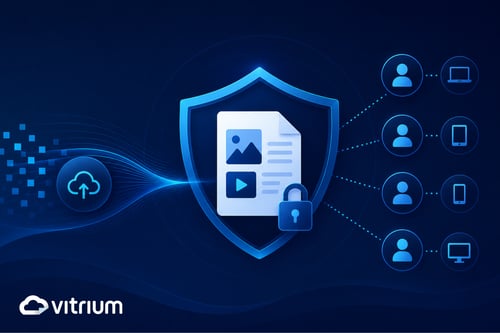
Today, the way organizations distribute content isn’t as straightforward as it once was. Content is delivered through websites, member portals, learning platforms, and e-commerce systems, and it might be sold, licensed, shared with members, provided as part of a course, or distributed in other ways. At the same time, customers are no longer willing to tolerate the clunky journeys they once did. People expect fast, convenient, on-demand access, wherever and whenever they need it. So how do you maintain control over content once it has already left your hands without frustrating those who should be able to access it?
Digital Distribution Changed - So Did DRM Expectations
COVID-19 accelerated the shift to digital, which was already well underway. Training moved online. Associations pushed more resources through member portals. Publishers and research organizations distributed more digitally. Businesses shared documents remotely with customers, partners, and employees.
The more content moved online, the more that "after distribution" problem showed itself. A course resource gets shared with people who never paid for it - or a competitor. A member downloads an entire research library, then cancels. A confidential document gets forwarded to someone who was never supposed to see it.
The goal is to make the content available to the right people, on the right terms, for as long as they're meant to be entitled to it without legitimate users having to jump through hoops to access it.
How Modern DRM Helps
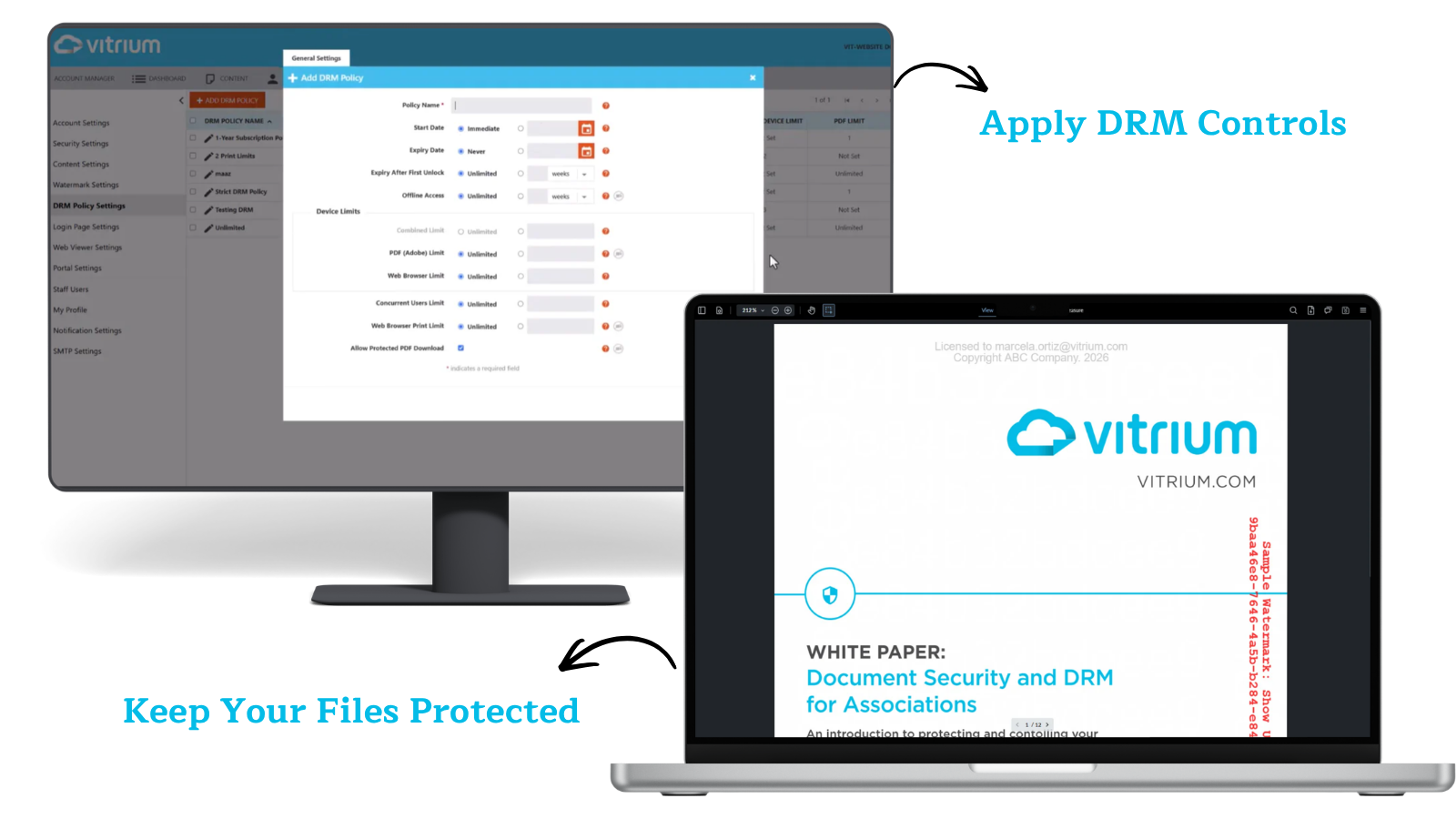
Modern DRM gives content owners control over who can access their content, how they access it, and what they can do with it. That might mean preventing downloads and printing, capping devices, setting expiry dates, or revoking access when a membership or license ends.
It can also provide visibility that you never had with email or a shared drive. Knowing which content your audience uses can help shape future content and commercial decisions. All without disrupting your current workflow or affecting your user's experience.
What is DRM Used for?
DRM still gets associated with entertainment, but a lot of organizations use it to protect very different content.
Associations and standards bodies may need to prevent members from downloading an entire resource library before cancelling their membership. Standards organizations also need to consider version control. An outdated or superseded standard that's still circulating unchecked can lead a company to build to the wrong spec entirely.
Training providers use DRM to prevent one paid seat being reused across an entire cohort. Publishers and research organizations use it to keep control of eBooks and reports after they've been distributed.
Not every use case is about revenue, either. Plenty of organizations use DRM simply to keep confidential material controlled.
What Does Modern DRM Look Like?
DRM should protect content without making legitimate access difficult.
That’s where Vitrium takes a different approach.
Users can access protected content directly through their browser without plugins or software installations. Organizations can manage content, users, device limits, permissions, and usage from one intuitive admin dashboard, while REST APIs make it possible to integrate Vitrium with the systems they already use.
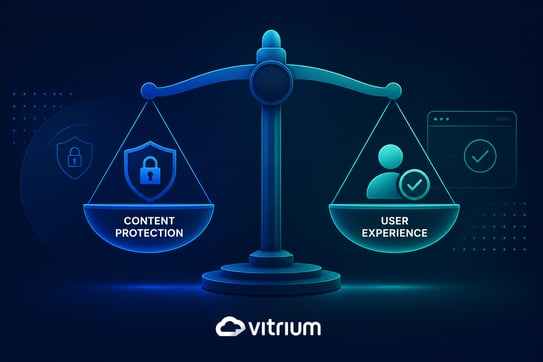
Over more than 20 years, Vitrium has helped shape the way organizations think about protecting and distributing digital content, while helping set expectations for what secure, user-friendly DRM should look like.
DRM is about maintaining control over valuable content after it leaves your hands, while making sure that protection doesn't create unnecessary problems for the people accessing or managing it.
If you're distributing content that took real work to produce, talk to us about Vitrium's DRM solutions.